Origin & Foundation
A record of how the Rafonel knowledge archive was assembled — the observational methodology, the specialist background, and the analytical philosophy behind the documentation.

Postgraduate training in nutritional science and behavioural research methodology, with documented specialisation in appetite psychology and stress-related food behaviour across diverse individual profiles.
The Rafonel archive was initiated in 2013 as a structured response to the lack of accessible, evidence-informed documentation on stress eating patterns outside academic publishing channels.
Individual consultations, structured food-behaviour audits, and the ongoing maintenance of the indexed research archive. We recommend speaking with a qualified wellness or nutrition professional before introducing any significant dietary change to your daily routine, particularly if you have specific dietary requirements.
The observation that started the archive
The initial observation was straightforward: individuals who described themselves as eating well under ordinary circumstances reported consistent, documented shifts in both food selection and intake volume during periods they identified as stressful. The shift was not random. It followed a pattern — specific food categories, specific times of day, specific emotional triggers.
What was less clear was why existing nutritional frameworks addressed this pattern almost exclusively in specialist or extreme-behaviour contexts. The vast majority of stress eating — the kind experienced by people who are otherwise managing their nutrition competently — was largely undocumented at the individual field level.
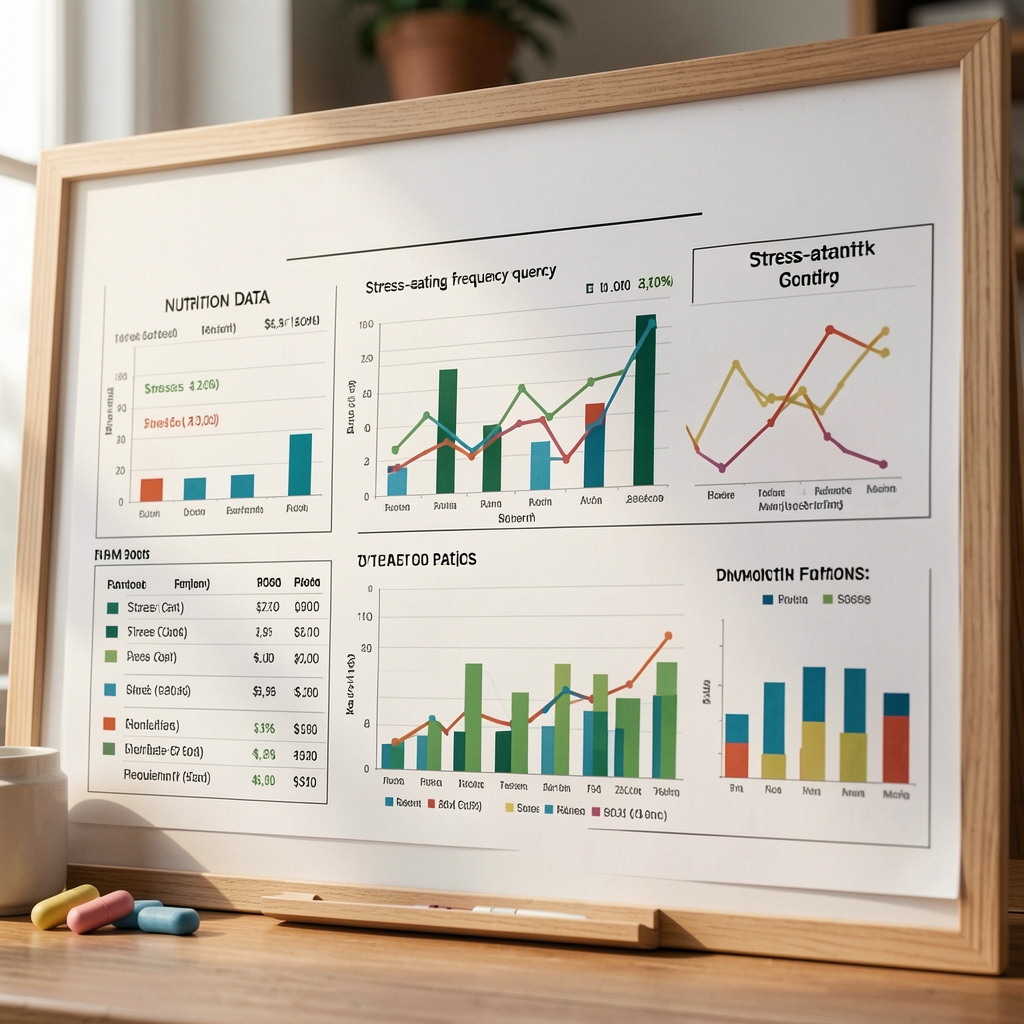
The Rafonel archive was established to fill precisely that gap: individual-level documentation of stress-eating patterns, cross-referenced by stress type, food category, meal context, and observed outcome. Not a population study. Not a survey. A field archive of individual cases, each treated as its own reference record.
Observation before intervention
The central methodological principle of the Rafonel approach is that accurate documentation precedes any proposed adjustment. The appetite profile of an individual under stress cannot be usefully addressed without first establishing a baseline: what they eat, when, in what quantities, and under what circumstances.
This is a technical stance, not a moral one. The Rafonel archive makes no judgement about food choices. It records, analyses, and cross-references. The value of that record lies in its accuracy, which depends on the absence of prior judgement in the data collection phase.
Practical calibration — the structured adjustment of food environment, timing, and composition — follows only once the baseline record is complete and the pattern structure is clearly documented. Adjustments that precede documentation tend to address surface behaviour rather than underlying appetite architecture.
Key development records
Archive initiated — London
First individual case records compiled. Initial focus on occupational stress and its correlation with meal timing irregularity and evening high-density food intake among professionals in central London.
Cortisol-appetite index developed
Following three years of field documentation, a cross-reference index linking cortisol-exposure type with food-category preference was developed from the dataset. The index now covers 8 distinct stress-appetite response profiles.
Emotional hunger documentation framework formalised
A structured intake protocol for distinguishing emotional hunger from physical hunger was formalised and incorporated into the standard individual case-record format. Revision 04-B archived, June 2019.
Behavioural nutrition calibration protocol v2 released
Revised calibration protocol incorporating meal-timing research from 2020–2021 literature, updated for post-pandemic occupational stress patterns. Published as internal archive revision series REF-V2.
Public archive launched — Bermondsey Street, London
The Rafonel knowledge base, previously accessible through direct consultation only, is now indexed and available for broader reference via this public archive. Individual consultation records remain confidential.
The archive environment

No Judgement
The archive operates as a measurement instrument. Food choices are data points, not moral events. Documentation accuracy depends on this distinction being maintained throughout every case record.
Pattern Precision
Individual stress-eating records are only useful when they are precise. The Rafonel intake protocol uses standardised terminology and category classification to ensure cross-case comparability within the archive.
Calibration Not Prescription
Adjustments emerging from the archive process are calibrations to an existing food environment — not rigid directives. Individual variation in appetite, schedule, and stress response requires flexible, documented approaches.
Evidence Reference
All cross-references within the archive are drawn from nutritional and behavioural research literature that has undergone independent peer review. The archive is a secondary analytical layer, not a primary research source.